In April 2026, AIN.ua published an extensive piece featuring our case study “Why Entrepreneurs Invest in Uzhhorod: The GAZDA Developer Case” — about relocation waves, the new-generation buyer profile, and the demand structure on the Uzhhorod housing market. The article drew significant response from entrepreneurs considering Uzhhorod as a base for business and life. We decided to return to the same figures and theses, but from a different angle — for the buyer and investor who have already chosen Uzhhorod and are looking for specifics. Below is a condensed adaptation focused on why the club format became a structural answer rather than a marketing category.
Relocation waves have shaped a buyer segment in Uzhhorod for whom underground parking and a car-free courtyard are not optional but the baseline expectation. We unpack how the market has changed, why the club format became a structural answer, and what the geography of buyers from the Kyiv region and frontline regions means for the city.
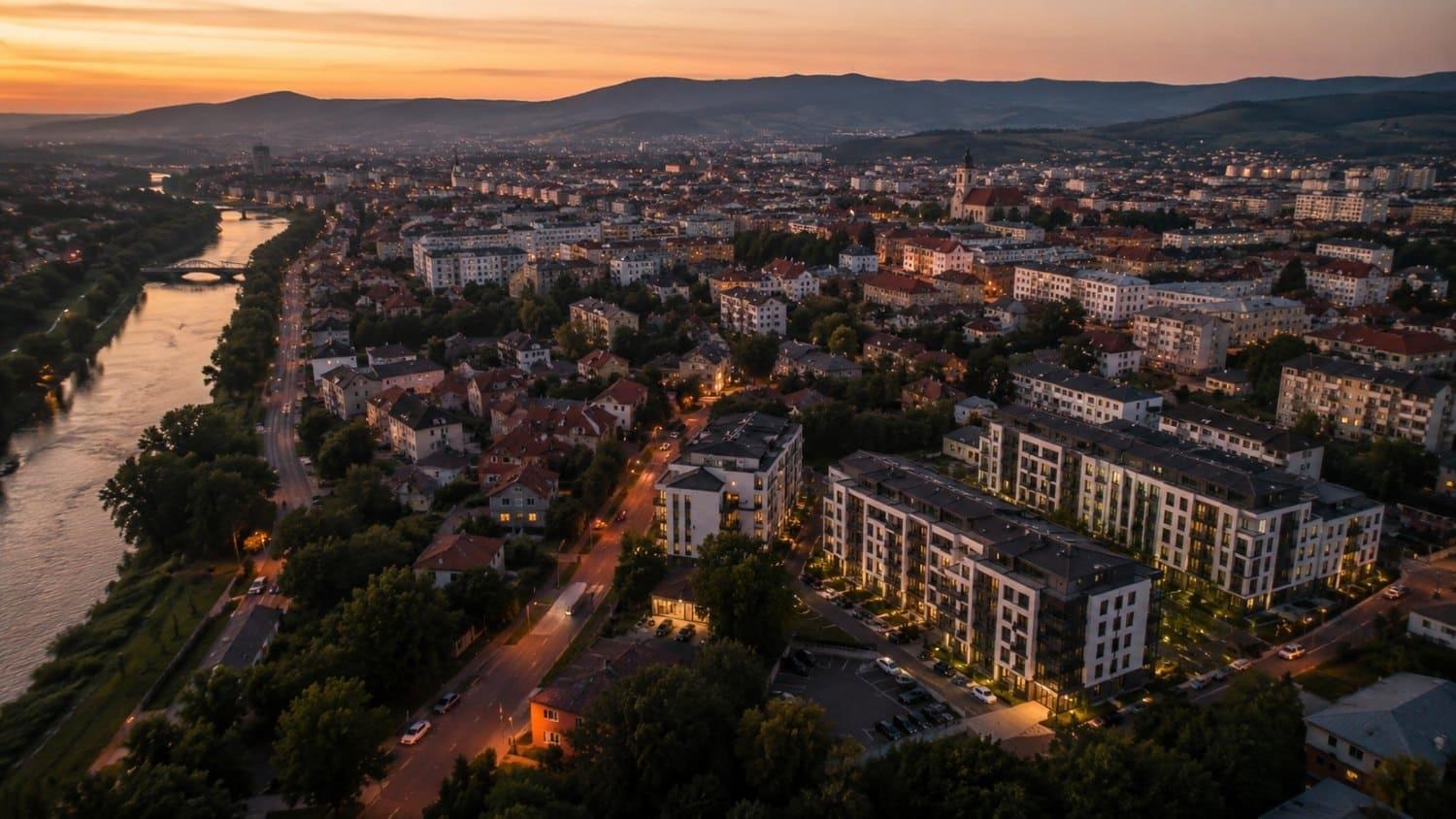
A person relocating to Uzhhorod from Kyiv, Dnipro, or Kharkiv brings more than just belongings. They bring a set of formed expectations about housing — underground parking, a car-free courtyard, predictable neighbor density, controlled access, an apartment ready to move into. In most regional centers, these expectations crash against reality: the old housing stock dominates, new development appears in isolated pockets, and its quality often falls short of big-city standards.
Uzhhorod became one of the few exceptions. Two processes unfolded here in parallel: the relocation influx of solvent demand after 2022, and the emergence of supply that matches the expectations of that demand. This article analyzes how exactly the Uzhhorod housing market has structured itself, why club-format development became its load-bearing element, and how the buyer profile changed the rules of the game.
GAZDA — a developer that has been active on the Uzhhorod market since 2007 — is used here as an illustration of practice. Not as the protagonist, but as an example of what happens to a market when supply begins to grow alongside expectations.
The experienced buyer: a profile that changed the rules of the game
Buyer geography as an indicator of the city’s strategic positioning
Infrastructure as part of the product: education, children’s spaces, services
The 2022 relocation wave fundamentally changed the structure of demand in Uzhhorod. Before that, the market served primarily a local buyer with moderate purchasing power — and the supply was accordingly shaped around the mid-segment: typical panel buildings, infill development without distinct concepts, dominance of the secondary stock.
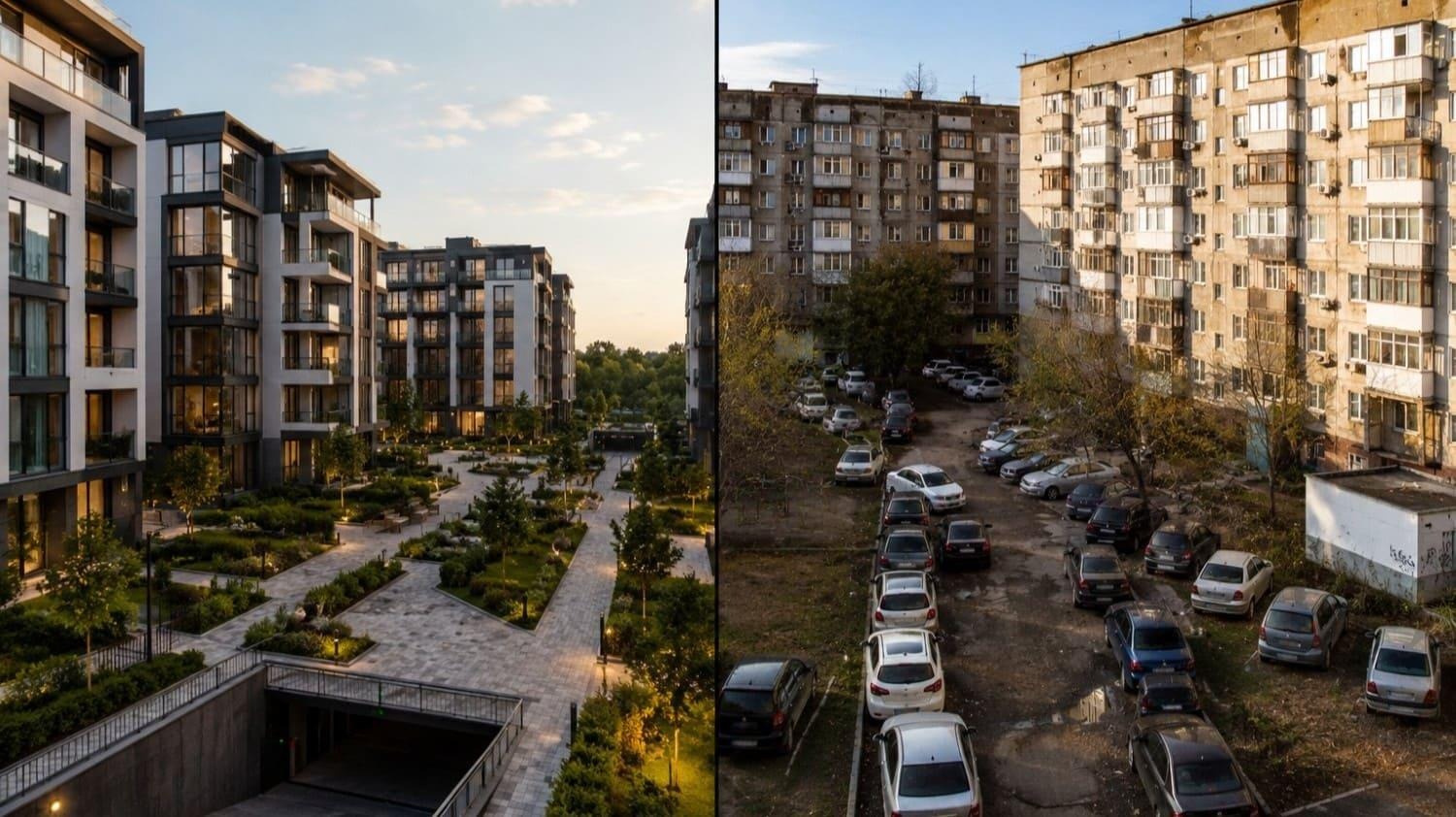
After 2022, the picture changed. The city received an influx of buyers from Kyiv, Kharkiv, Dnipro, Zaporizhzhia — people accustomed to a different housing standard. This isn’t a question of conspicuous consumption. It’s a question of basic operational options: where to park the car in winter, whether children can safely play in the courtyard, how many neighbors share an entrance, how waste collection and grounds maintenance are organized. In big cities, these questions have been settled at the level of new-segment standard for a decade already. Regional markets before 2022 largely operated on the logic of "whoever moves here will get used to it." After 2022, the logic flipped: now the market gets used to the buyer.
Uzhhorod, meanwhile, has several structural characteristics that make it attractive specifically to the mature buyer. The city is compact — by various estimates, a population of around 115,000 across roughly 65 km². Its border location with Slovakia and Hungary forms a natural logistics point. Climatically milder than most inland regions. Infrastructurally less overloaded than Lviv or Kyiv.
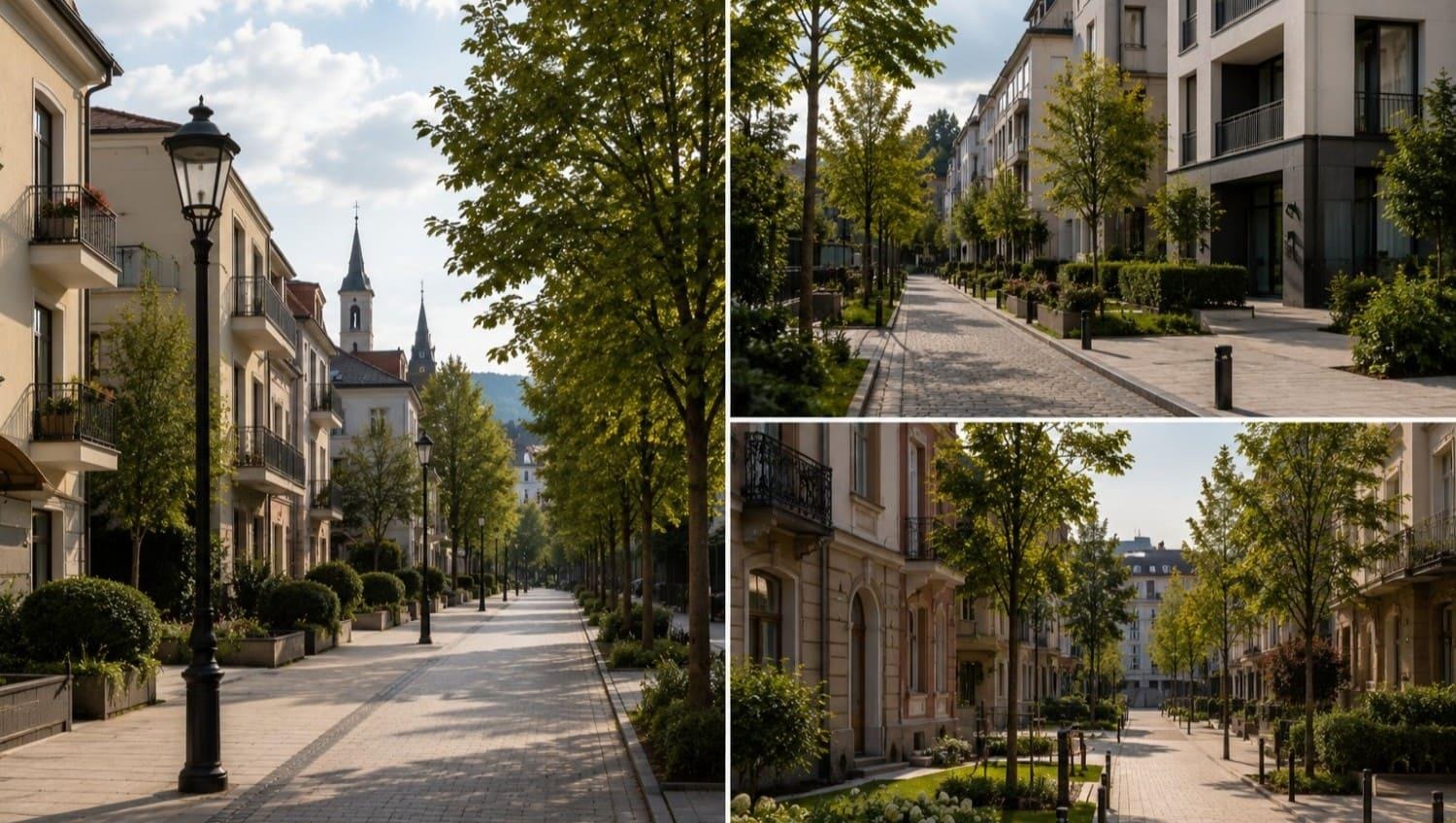
GAZDA has been working in this market since 2007. Over nearly 20 years, the company’s portfolio comprises more than 150,000 m² of completed housing and 18 delivered projects of various formats: from residential complexes to business spaces and townhouse communities. These figures matter in the Uzhhorod context not in themselves but as an indicator: a market on which a single developer can deliver nearly two dozen quality projects is a market that has managed to form its own supply, not simply react to demand. By comparison: for such a volume to be delivered in a city of around 115,000, a developer must run at full capacity for nearly two decades in a row, with regular new-project launches and stable sales. That only works in a market where the quality segment has steady demand.
The paradox of the Uzhhorod market is that the overall volume of housing supply exists, but the volume of supply that matches a relocant’s expectations is structurally limited. The old stock covers quantity, not quality. The new stock covers quality but not quantity, because the number of developers working above the mid-segment is limited.
The bulk of Uzhhorod’s housing stock is Soviet-era construction and infill development from the 2000s. The first category cannot structurally meet the experienced buyer’s expectations: these are panel buildings with fixed layouts, without entrance spaces designed for modern scenarios (parking, stroller rooms, storage), often with outdated engineering networks. The second category is heterogeneous: among 2000s infill developments there are projects of acceptable quality, but often without a conceptual approach to the surrounding grounds and infrastructure.
It is precisely this disproportion that makes Uzhhorod interesting for analysis. It is not an example of "an oversaturated market where you have to fight for the buyer." It is an example of "a market where quality supply is still catching up with quality demand." In such a configuration, a developer offering an upper-segment product is not competing for market share — they are rather forming the segment itself, in which competition will appear several years later.
A separate structural feature of Uzhhorod is its border location with Slovakia and Hungary. This affects the housing market across several dimensions at once. First, a portion of buyers view Uzhhorod as a point from which it is convenient to run business with the EU — import-export logistics, regular trips to European offices, access to European banks and education. Second, cross-border trade and logistics play a significant role in the city’s economy — a separate layer of demand with its own logic. Third, the European context shapes a cultural frame of expectations: a buyer accustomed to European construction standards naturally expects a comparable level in Uzhhorod as a border city, not as a "deep region."

The key characteristic of the new Uzhhorod buyer is having a basis for comparison. This is someone who has already lived in new development in Kyiv, Lviv, or abroad. They know what a car-free courtyard looks like, what a basement storage room is, how underground parking differs from surface parking, how long it actually takes to wait for an elevator in a building with 200 apartments per entrance.

Marianna Bihunets, GAZDA’s commercial director, describes this profile this way:
We deliberately don’t go for mass-market, because we understand: our client is an experienced person. Often it’s Kyiv, Lviv, or Europe altogether. They don’t need to be told why underground parking or a car-free courtyard matters. They simply expect it as the baseline. And in exactly the same way they value the things that are harder to copy: quiet, privacy, a small number of neighbors.
The pivotal point in this quote is not "we do it better" but "our buyer has a different baseline." This is a different market positioning. A developer oriented toward a first-time buyer sells advantages. A developer oriented toward an experienced buyer sells expected conformity — what ought to be there anyway, only executed without compromise.
If we break the experienced buyer’s expectations down into concrete elements, we get a fairly clear list — and it matters that none of the items claims the status of "exclusive":
This list doesn’t claim to be complete — these are just the most visible elements. The key point is that no single expectation on its own is extravagant. What becomes extravagant is meeting all of them at once — and that’s precisely the difference between "just a new build" and housing for an experienced buyer.
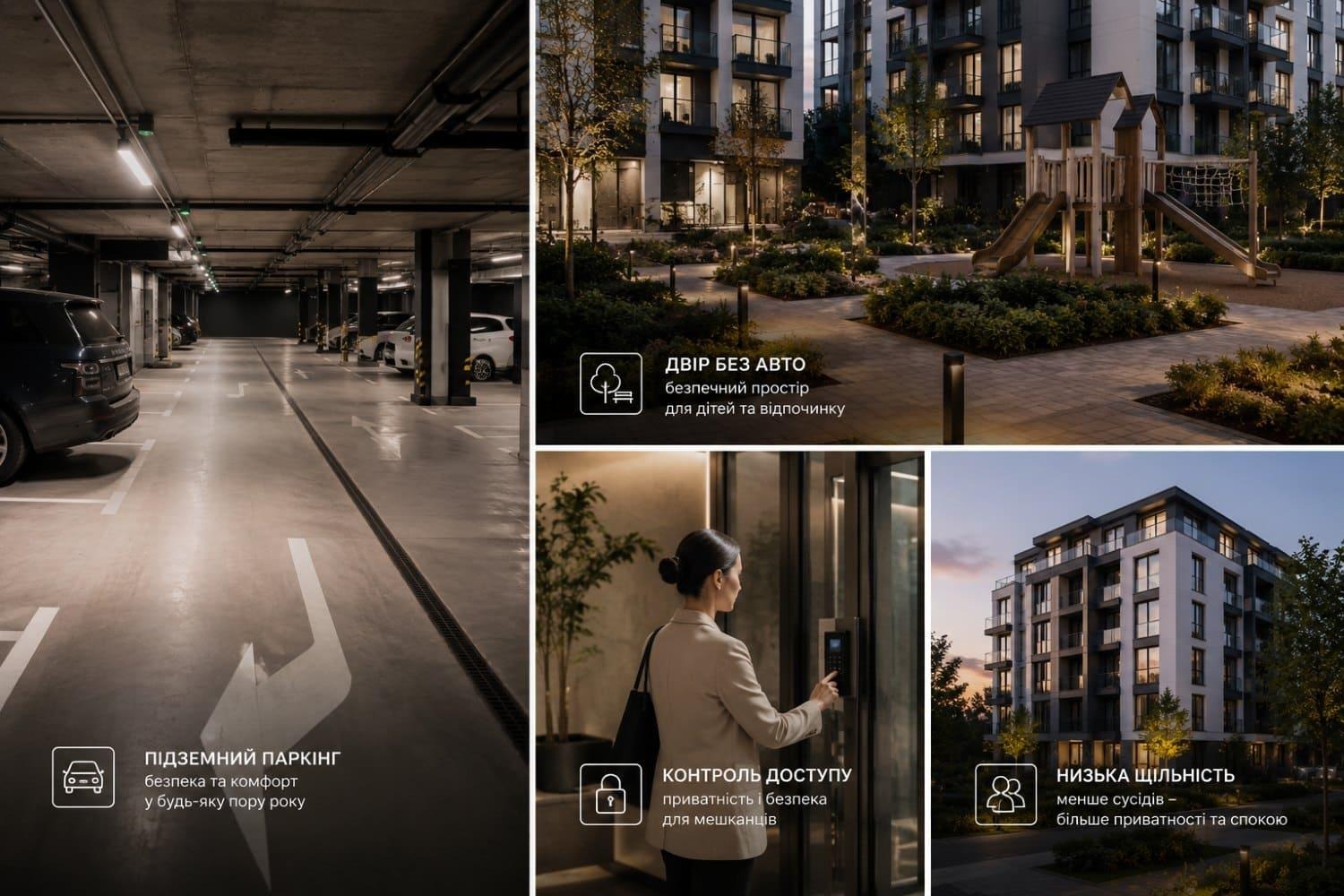
The second important shift in expectations is the readiness of the housing. The era of "shell-and-core finish" as the norm is gradually closing in the upper segment. A buyer relocating from Kyiv isn’t prepared to put in another half-year and a substantial budget on finishing work after having already paid for the apartment.
Mykhailo Hozda, GAZDA co-owner, puts this dynamic directly:
People are tired of "shell-and-core finish," construction dust, and another year of stress after buying an apartment. Most of our buyers don’t want to put life on hold — they want to move in and start living right away.
Behind this point is a structural shift in the demand model. Whereas previously "the keys to the apartment" meant the start of renovation, for the experienced buyer the keys should mean moving in. This shifts a large chunk of costs and responsibility from the buyer to the developer — and automatically raises the bar for a developer wanting to work in this segment.
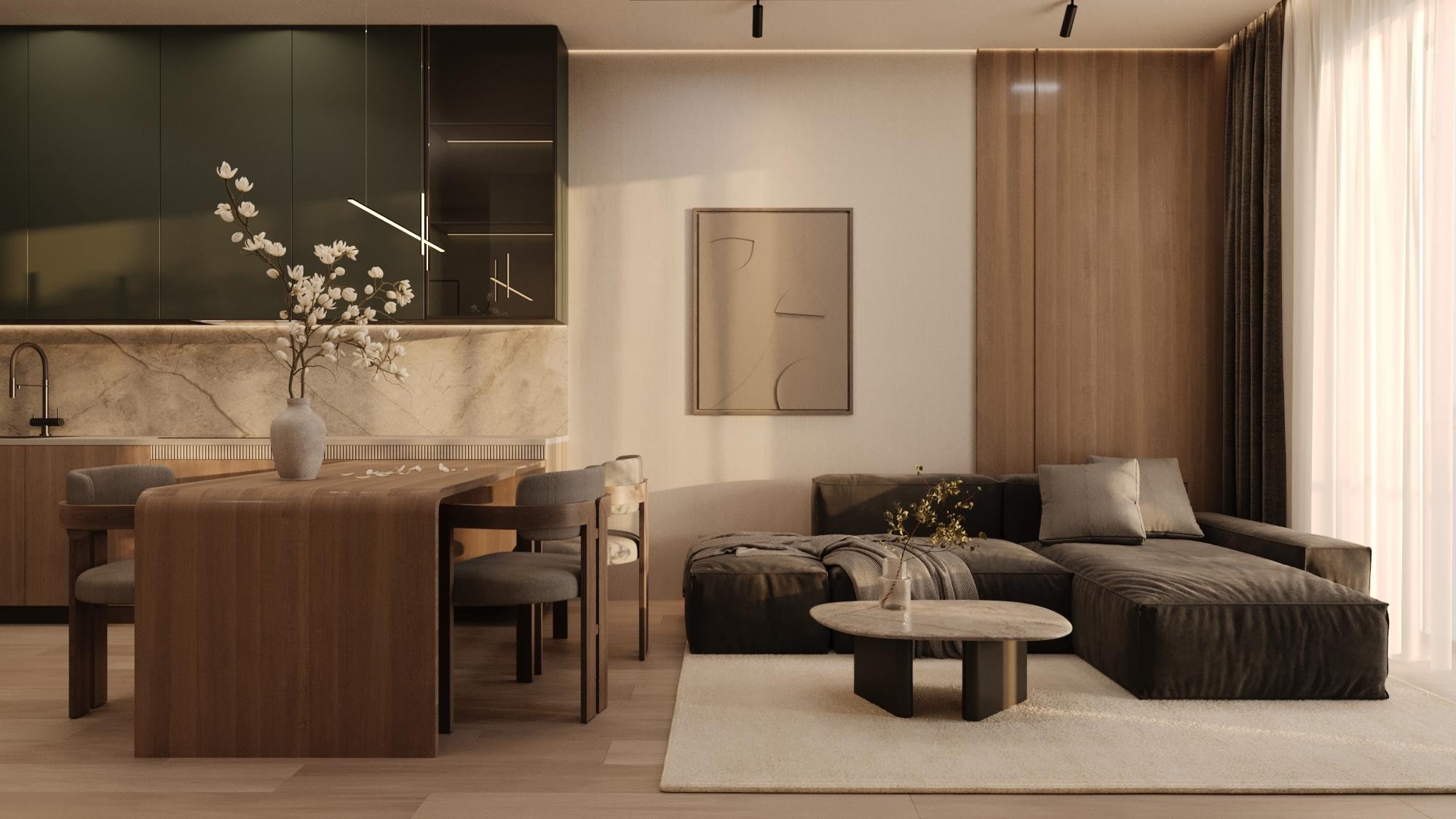
Mature demand shows itself not in the buyer expecting more, but in the buyer’s baseline already being set. Underground parking, a car-free courtyard, controlled access — these aren’t premium-segment options, they’re the lower threshold below which a person with formed expectations simply won’t consider the property.
A market that begins to treat this threshold as the norm enters a phase of mature competition — not on lower price, but on deeper environmental quality.
The term "club-format development" has dissolved into marketing copy to such an extent that it is often used as a synonym for "expensive" or "exclusive." That is inaccurate. The club format is defined neither by the number of floors, nor by square footage, nor by the level of finish.
Its structural essence is a limited number of households within a single space. This automatically produces a different operational logic: less anonymity in the entrance, lower load on shared infrastructure, a predictable neighbor profile, natural quality of neighborly relations without the need for artificial "community programs."
In one piece on GAZDA, this idea is framed through an everyday comparison: the sense of space in a building with 200 apartments per entrance is not the same as in a building where you have 20–30 neighbors. This isn’t about snobbery, it’s about everyday operational experience — elevator speed, the probability of meeting a familiar face in the courtyard, the volume of shared decisions about cleaning, parking, landscaping.
In large-scale development, density is a function of profitability. The more apartments on a plot, the lower the cost per square meter and the larger the project can be. This works, but it produces a side effect: the shared infrastructure will always be somewhat overloaded, because it was designed for economic, not comfortable, density.
In the club format, the logic is reversed. Density is deliberately limited, which automatically lowers economic efficiency per square meter on the land axis — but raises it on the environment axis. The buyer pays not only for the apartment, but also for a predictable neighborhood and an infrastructure reserve.
A separate, rarely discussed consequence of the club format is the speed of shared decisions. In a building with one hundred twenty apartments per entrance, any collective decision about landscaping, repairs, security, or changing a contractor is accompanied by long approval procedures. In a club complex, the same procedure takes substantially less time — the number of parties at the table is different.
This affects operational quality not immediately, but two or three years after handover. A building that quickly decides to address problems doesn’t accumulate "tails" — unfinished items, open questions, postponed improvements. A building that can’t reach a shared decision inevitably degrades — not structurally, but in the small things that shape the daily experience of living there.
Another structural feature of the club format is price behavior on the secondary market. The standard logic for mass-market development: an apartment gradually loses value relative to new projects, because the comparison set keeps refreshing. The club format works differently: because there are objectively fewer such projects on the market, secondary-market competition is lower, and the demand profile is the same experienced buyer who initially chose an apartment in the primary segment.
This means club housing more often holds and grows in value — not because of speculative factors, but because of limited supply. For a buyer who views housing both as a place to live and as an asset, this difference becomes noticeable on a 5–10 year horizon.
For a compact city like Uzhhorod, the club format is not an alternative to mass-market development but one of the natural answers to geography. Available large plots for major residential blocks are objectively fewer here than in major metropolises. So development is often shaped through small plots for club complexes — and the market has gradually learned to operate within precisely this logic.
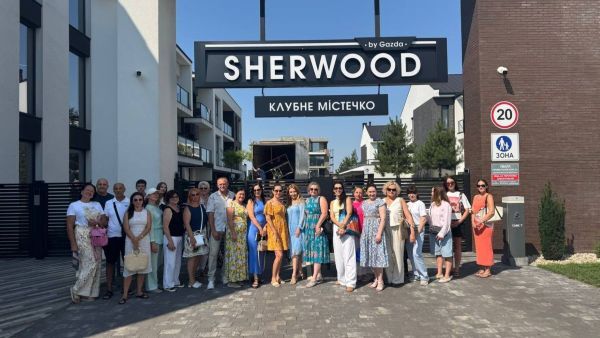
In GAZDA’s portfolio, the club format includes, in particular, the SHERWOOD project — a combination of townhouses and apartments within a single ecosystem, without mixing with mass-market development. Details of this project are in the next section.
SHERWOOD in GAZDA’s portfolio is realized in two complementary formats: the SHERWOOD club town (townhouses) and the residential complex of the same name. The key feature is that both formats sit within a single ecosystem and don’t mix with mass-market development. This means unified infrastructure (roads, engineering networks, landscaping, security), a unified construction quality level, and a unified neighbor profile.
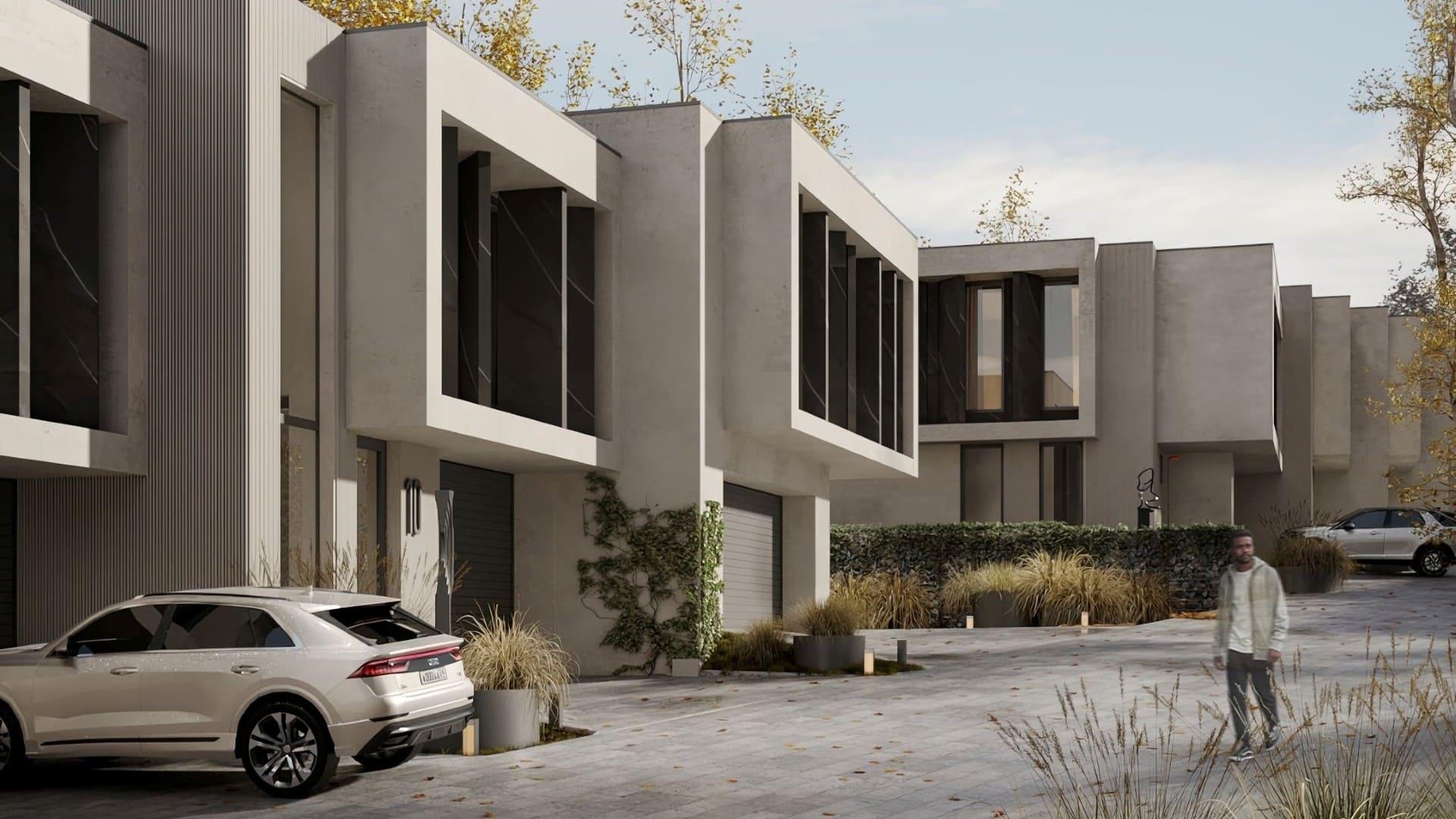
Such integration of two formats within a single project is uncommon practice for regional markets. The standard scenario is that townhouses and a residential complex are built independently, with different management companies, different approaches to landscaping, and different paces of service-quality growth. SHERWOOD is designed to avoid this fragmentation.
The notion of a "single ecosystem" sounds like a marketing formula, but it has concrete operational meaning. In SHERWOOD this comes down to several structural decisions that only become visible at the operating stage:
Without these decisions, the club format remains a marketing label. With them, it becomes an operational standard the buyer feels every day.
A separate element of the project is the homogeneity of the neighbor profile. In Uzhhorod this works in a specific way: a significant share of SHERWOOD buyers are people who relocated from Kyiv, Kharkiv, and Dnipro. This means the neighborhood is automatically formed from people with comparable business backgrounds, comparable service expectations, and a comparable logic of everyday decisions.
GAZDA’s PR materials include the point that in such an environment a portion of everyday and business questions get resolved faster — when a tennis partner or a parking neighbor is at the same time a business owner from a familiar region. This is not about a privileged community, but about natural networking that forms from the geographic homogeneity of relocants.
Alongside SHERWOOD, GAZDA’s portfolio includes a project of a different format — PARKLAND, a 9-story business-class residential complex. The formal difference is in the number of floors and the model: SHERWOOD is low-rise club, PARKLAND is mid-rise urban.
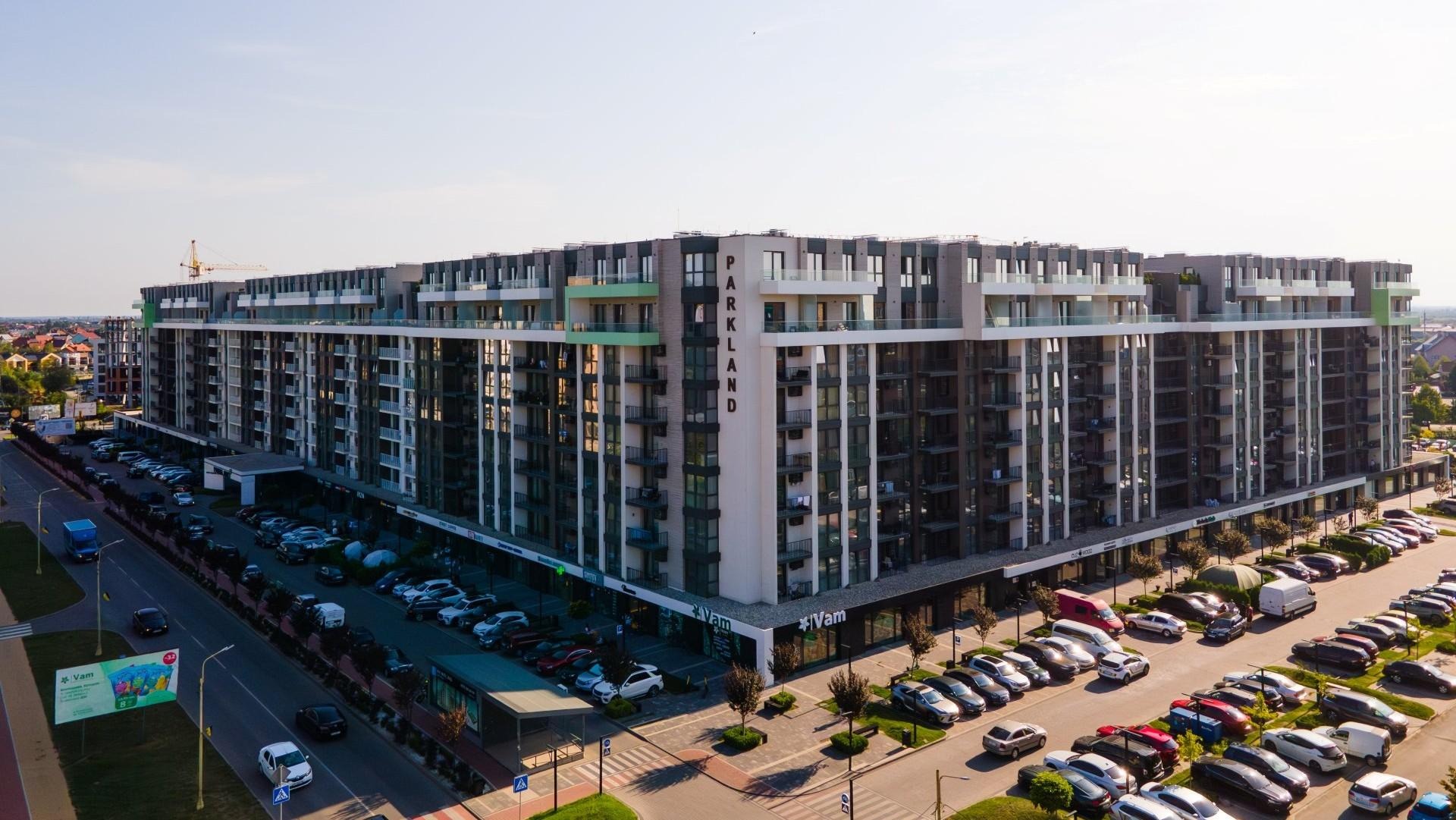
The point of having two formats in the portfolio is that the mature buyer doesn’t reduce to a single type of housing. Some prioritize privacy and a small number of neighbors — they choose the club format. Others prefer an urban scenario with closer access to downtown infrastructure and a denser city context — they choose the mid-rise complex. A developer working with only one format inevitably loses part of the segment.
Between low-rise club and mid-rise business class there is a clear segmentation by life scenario. The club format works for the buyer whose priority is privacy and a controlled environment — often families with children or people who work remotely and value quiet. Mid-rise business class is for the buyer for whom proximity to city infrastructure, restaurants, office spaces, and cultural venues matters more.
Price isn’t the main segmentation factor between these formats, since it can overlap. The main factor is life scenario and the preference between controlled privacy and an active urban context. In a portfolio that includes both formats, the buyer can make the choice without switching to another developer — and that choice is often deliberate, not accidental.
The club format is not defined by the square footage of an apartment or the level of finish. Its structural essence is a limited number of households within a single space.
This produces a different operational logic: lower load on shared infrastructure, predictability of the neighbor profile, natural privacy without facade anonymity. That is precisely why club complexes in regional cities with a relocant inflow show higher demand stability than large residential blocks.
The most interesting analytical fragment of the GAZDA case is the geographic distribution of buyers. As of 2026, by the company’s data, the profile looks like this:
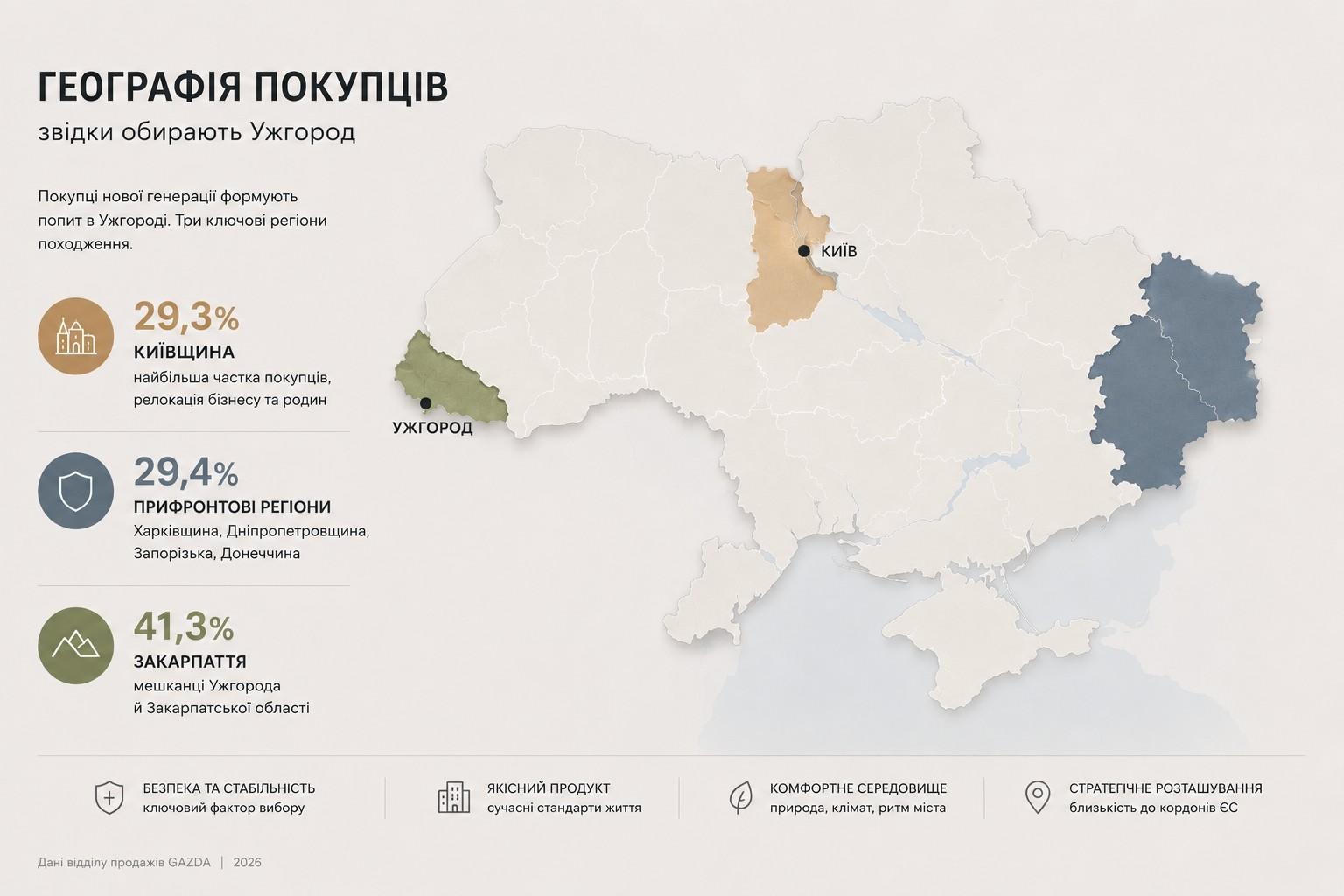
29.3% of buyers — from the Kyiv region
29.4% — from frontline regions (Kharkiv, Dnipropetrovsk, Zaporizhzhia, Donetsk oblasts — by the broad reading of the category)
41.3% — residents of Uzhhorod and Zakarpattia
What these figures mean in market-interpretation terms calls for separate examination, because at first glance they can be read superficially.
The first interpretive mistake is to assume that the 41% local-buyer share means Uzhhorod "hasn’t fully switched over" to relocants. That’s inverted logic. In most regional markets, the local-buyer share in new upper-segment projects is significantly lower — not because local demand is absent, but because the local buyer can’t afford this segment.
The fact that 41.3% of Uzhhorod’s buyers are local means a local solvent layer has already taken shape in the city, ready to compete with relocants for quality housing. This is an indicator of market maturity, not of its limitation.
The nearly identical percentage of buyers from the Kyiv region and from frontline regions is a structural phenomenon, not statistical noise. The Kyiv region supplies a buyer with a basis for comparison: someone arriving from Kyiv brings expectations shaped by the Kyiv market and chooses Uzhhorod precisely because comparable quality is available here with a different life logic — a calmer pace and a better climate.
Frontline regions supply a different type of buyer — someone for whom relocation is partly involuntary, but the choice of a specific city is already strategic. In this logic, Uzhhorod is chosen not as the "nearest safe city" but as a base for long-term life — with cross-border logistics, a European context, and developed service infrastructure.
The structure of demand automatically shapes the structure of the neighbor environment. In a project with roughly a third of buyers from each of the three categories, a fairly homogeneous environment forms along one key dimension — the economic and experiential one. Almost all upper-segment buyers have a basis for comparison one way or another — from a large Ukrainian city, from the cross-border logic, or from the mature local market.
This doesn’t imply homogeneity along other lines — profession, age, lifestyle. But it does mean that the baseline range of expectations about the environment will be similar among neighbors. And that is a key component of the club format’s long-term stability.
If we assume the 29/29/41 proportions hold (and there are no grounds for a sharp change so far), Uzhhorod’s market five years out will look like this: a significant share of solvent demand consists of people who have already put down roots in the city but maintain professional ties to Kyiv and frontline regions. This fundamentally shapes the market profile — demand remains, but becomes less sensitive to short-term market fluctuations.
The second structural consequence is the stabilization of the local layer. 41.3% is not just a statistic, it’s an indicator that a middle class has formed in Uzhhorod that is ready to compete with relocants for quality housing. This layer will not "dissolve" with a possible outflow of some relocants — it will remain as baseline demand for the quality segment.
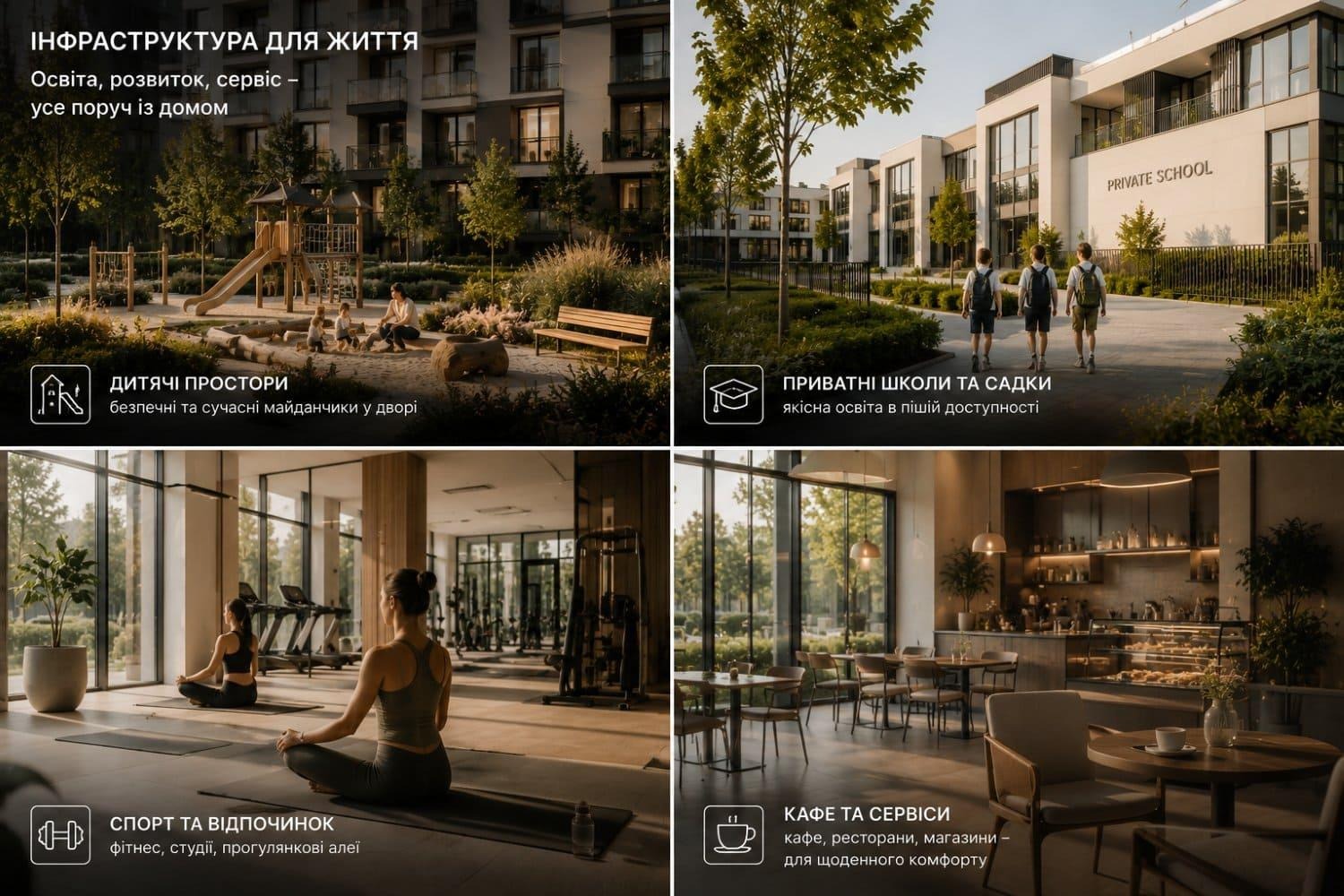
One of the less visible but structurally important consequences of the relocation inflow is the rapid growth of private educational and service infrastructure in Uzhhorod. The number of private schools, kindergartens, and development centers in the city has grown substantially in recent years [requires verification — a specific figure needs current data]. This is a direct consequence of the fact that a buyer from Kyiv or Kharkiv brings with them not only a housing request, but also a request for a daily life scenario for their children.
A developer who fails to account for this sells square meters. A developer who does account for it sells a scenario — short routes, integrated children’s spaces, predictable daily logistics.
In GAZDA’s practice, children’s spaces are integrated into the residential complex at the design stage — as part of the product, not as a decorative landscaping element. This means the playground isn’t "squeezed" between the parking and the entrance, but built into the courtyard structure as a distinct zone with its own logic of safety, sightlines, and use.
The fundamental difference between these two approaches becomes visible at the operating stage. A playground designed after the architecture is already built works formally. A playground designed simultaneously with the courtyard works every day — without the continuous follow-up work that management companies otherwise carry out at residents’ expense.
Alongside the development of private education in Uzhhorod, projects integrated with residential complexes are emerging — educational spaces, children’s clubs, multifunctional family centers. PARKLAND in GAZDA’s portfolio is mentioned in the context of integration with such infrastructure elements, including [HomeBase and Cambridge International — requires verification against open sources at zk.com.ua].
This direction of development isn’t the exclusive feature of one developer but a market pattern: once a solvent relocation layer appears in a city, infrastructure services start emerging next to housing rather than separately from it. A developer who anticipates this gets a project that grows in value not only through construction quality, but also through the density of useful infrastructure around it.
Education is the most visible but not the only layer of service infrastructure forming around the new housing segment. In parallel, a medical layer emerges: general-profile private clinics, specialized centers (dentistry, pediatrics, rehabilitation), family doctors with a home-visit consultation format. This layer develops with a 1–2 year lag relative to housing appearing — first the client base forms in the new complexes, then the services arrive.
The third layer is fitness and wellness. Yoga studios, gyms, pools, centers for Eastern practices, spas — all this appears not by chance, but in the logic of a companion to solvent housing. For the Uzhhorod market, this layer has been developing noticeably in recent years [requires verification against current data].
The fourth layer is F&B and retail. Restaurants with European or neutral formats, cafes with workspaces, specialized grocery stores, wine shops. In a compact city, this layer has particular significance — walkability turns a cafe effectively into part of the resident’s daily route.
In a mature market, the pace of housing development and the pace of service-infrastructure development don’t run in parallel — they are in a feedback relationship. The appearance of new quality housing creates demand for infrastructure; the appearance of new infrastructure raises the value of housing. This cycle works steadily as long as the market has developers who don’t just push projects out but build infrastructure integration in at the design stage.
A developer who doesn’t build this integration in gets a project that operates "in a vacuum" — only on the strength of its own qualities. A developer who does build it in gets a project whose value grows along with the surrounding environment. The difference in long-term value is substantial.
In a mature market, housing stops being a standalone product and becomes part of a larger system: education, medicine, services, the safety of children’s routes.
A developer who fails to account for this sells square meters. A developer who does account for it sells a life scenario. The difference between these two approaches becomes visible not at the purchase stage but two or three years into operation — when the owner either feels that the project has grown alongside their expectations, or starts looking for an exit.
If we reduce the analysis to a single thesis, it reads like this: Uzhhorod is a market in which the buyer has defined the structure of supply, not the other way around. This is a fundamentally different configuration from the one most regional markets in Ukraine are used to.
Mature demand logic shows itself here in three dimensions. First, in an established baseline standard — underground parking, a car-free courtyard, predictable density — as the norm, not a premium. Second, in the structural advantage of the club format — not as a marketing category, but as an economically and geographically natural response to the city’s compactness and the buyer profile. Third, in the demand for a product ready to operate — from apartment finish to integrated children’s spaces and educational infrastructure around it.
GAZDA has been working in this market since 2007, with 18 projects and more than 150,000 m² of completed housing in the company’s portfolio. This isn’t statistical luxury — it’s an indicator that the Uzhhorod market has managed to develop its own maturity of supply in parallel with the maturity of demand. The 2022+ relocation wave became a catalyst, but not the root cause — the foundation was laid earlier.
For the buyer currently considering Uzhhorod, the main decision isn’t "whether to move" but "which format fits the life scenario." Between low-rise club, mid-rise business class, townhouses, and commercial investments, there is a dense field of choice. And the very presence of this field of choice is the most accurate indicator that the market is mature.
Standalone guides to help structure the decision:
How to buy an apartment in Uzhhorod in 2026 — a practical guide for buyers
The best neighborhoods of Uzhhorod — a comparison of neighborhoods by life scenario
All GAZDA projects, including apartments and townhouses
For investors — an analysis of the Uzhhorod real estate market for those entering it with investment logic
Uzhhorod has shifted from the category of "a potentially interesting regional market" to the category of "a market with formed supply for the experienced buyer." And that is the answer to why buyers from Kyiv, Lviv, and Europe choose it — not because it’s "beautiful and safe" here, but because here there is something that can be compared to what they’re used to.